Wednesday, 8 July 2020

Which One is the Best- HSS or TCT Planer Blade?

Are you planning to replace the worn out knife for your saw machine but are confused whether to go for HSS or TCT Planner Knife? Don’t worry! You are at the right place. Here, we’ll try to explain the basic difference between a HSS and TCT Planner Knife, thereby making it easier for you to decide which Knife is best suited as per your requirements.

HSS [HIGH SPEED STEEL] planer knives:
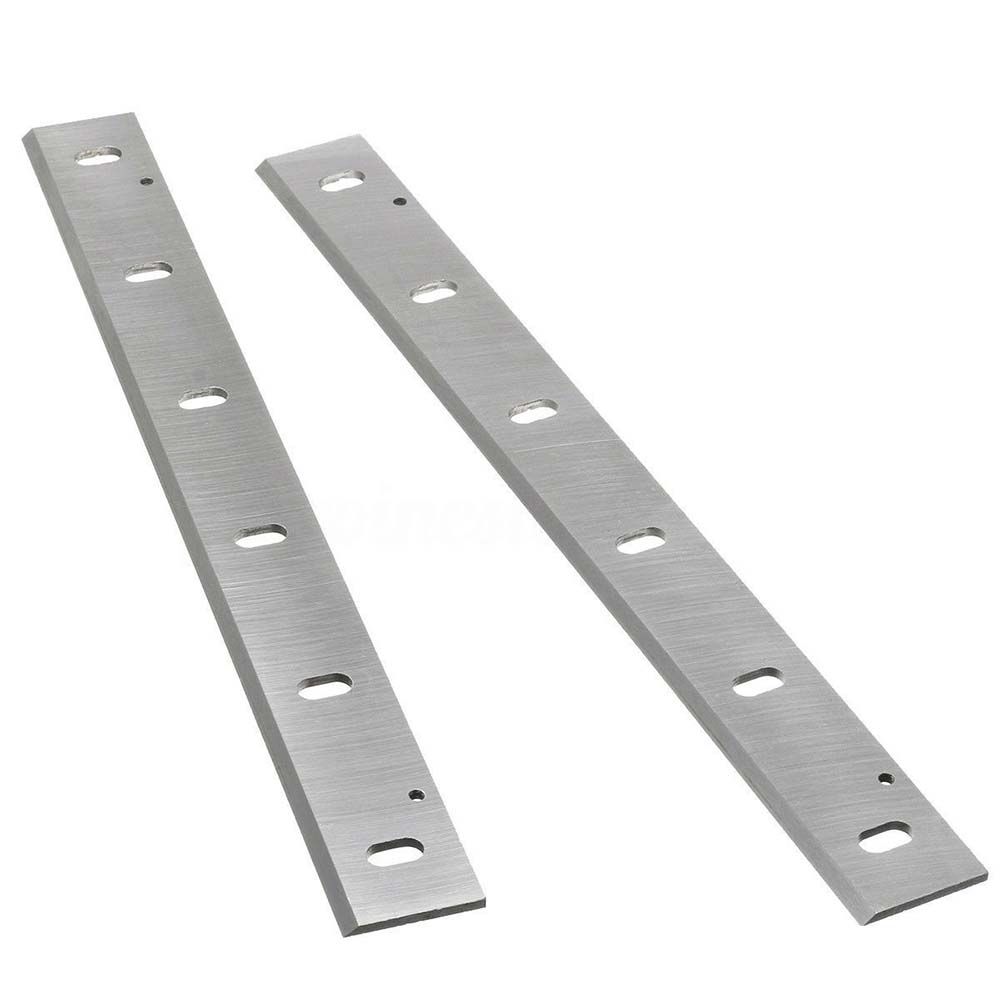
Plane Knives

  • High speed planer knives are also known as HSS. The high-speed steel type was patented in the year 1983.
  • High speed steels are basically alloys that possess their properties from various alloying metals that are added to carbon steel. It generally includes tungsten and molybdenum, or a combination of these two, often with other alloys as well.
  • All types of HSS belong to the Fe–C–X multi-component alloy system where X represents chromium (Cr), tungsten (W), molybdenum (Mo), vanadium (V) or cobalt (Co). Generally, the X component is present more than 7%, along with more than 0.60% carbon.
  • The addition of about 10% of tungsten and molybdenum in total maximize the hardness and toughness of HSS and maintains those properties at the high temperatures that are produced while cutting metals.
  • As the hardness of the material increases, you can use high speed steel with higher cobalt content (5% or more). So, if the material that you need to cut is hard, you can opt for a blade with high cobalt content.
  • High Speed Steel (HSS) planer blades are sharper than TCT blades, which delivers the smoothest planing result.
  • These blades cuts quickly and are cheaper than TCT blades.
  • These blades dull out faster than TCT so require to be replaced or re -sharpened frequently. These knives are less brittle therefore can be sharpened easily.
  • It is often used in power-saw blades and drill bits.
  • HSS knives were generally designed to be used with solid wood like cutting logs for firewood, slicing, re sawing, veneering, re shaping of both hard wood and softwood.


We, at Woodford Tooling, sell high quality HSS planer blades and ship these all over the world. You can browse and select best HSS blade from our exciting offers. You can buy HSS planer blades from here.

TCT [TUNGSTUN CARBIDE TIPPED] planer knives:
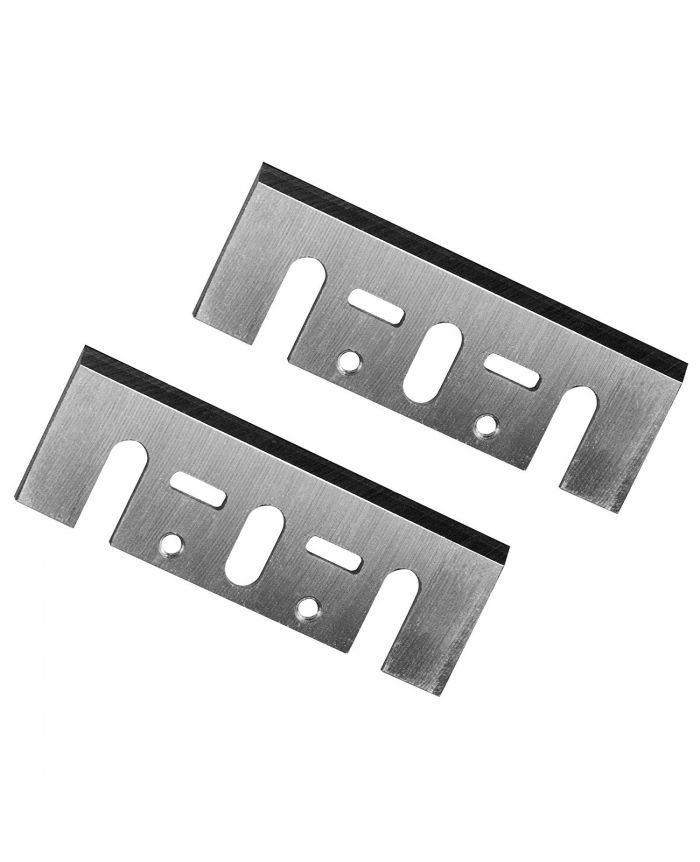
Planer blades TCT

  • TCT (Tungsten Carbide Tipped) planer knives are also called HM (Hard Metal) Knives, are either solid carbide planer knife or coated with Tungsten Carbide (TCT). Tungsten carbide gives features of toughness, hardness, wear resistance and shock resistance. Tungsten Carbide Tipped blades were patented in the year 1985.
  • TCT coated knives are less sharp than HSS ones. They give less smooth result than HSS blades, but the result is still agreeable.
  • The tungsten carbide tips are capable of operating at much higher temperatures than solid HSS, therefore, TCT saw blades are usually run at much higher surface speeds. This allows carbide-tipped blades to cut at faster rates and still maintain an acceptable chip load per tooth.
  • The biggest advantage of these knifes is that these stays sharp, usually about 5 times longer than HSS knifes.
  • These blades are more expensive than HSS blades but prove to be more cost effective in long run.
  • TCT saw blades are specifically designed for cutting metal tubing, pipes, rails, nickel, zirconium, cobalt and titanium-based metal.


It’s really hard to beat our prices with the quality of blades that we offer. If you already know the size of your TCT planer Knife or name and model of your machine, hurry up to buy best planer knives at our special discounted prices!


How to decide?

If your task involves wood cutting than doesn’t requires much accuracy and smoothness, HSS planer blades would work just fine for you. These blades will finish up your work faster as these cut quickly and will also save time, energy and overheads like power consumption etc.    

If your work to be done demands high quality accurate results and overweighs all other parameters, then TCT knives would perform well. These works best for metal cutting work.

If you’re looking at long jointer blades, HSS is a proven material, and in case your blade gets shattered down by running nails accidently through your machine, these blades aren’t very expensive to replace.

If you’re looking at a cutter head with segmented knives or inserts or hand held saws, carbide or TCT planer knife is a good choice.

Woodford Tooling is proud to be the largest stockiest of all type of planer blades in UK. If you need further assistance or looking for a specific size? We can further cut these blades to any custom length in order to meet up your requirements. Please feel free to contact us or call us at +44 (0)161 439 5683 and one of our technical advisers will assist you with any query which you might have.

Monday, 25 May 2020

How to Install Bandsaw Blade

If your bandsaw blade isn’t moving consistently while cutting and is becoming noisy or squeaky day by day, it’s sending signals for change. No matter how much carefully you handle it, after a constant usage the blade becomes dull or you’ll find some missing tooth in it. A dull blade will heat up much faster than a blade in good condition and will eventually lead to more serious problems like hairline cracks. It should be replaced immediately.

Need to buy new bandsaw blade? Woodford Tooling can supply thousands of different sizes of bandsaw blades for most of models.


CHANGING BANDSAW BLADE

Changing bandsaw blade can be roughly divided into two phases: Removal of the worn out old blade and installation of new blade.

Before you get started, you have to make sure that the band saw is disconnected to power supply and unplugged.

Phase I: Removal of Worn Out Bandsaw Blade

  • Open up the guide assemblies and remove the guide blocks. A bandsaw blade  has two assemblies, one above the table and the other below the table. These assemblies prevent the blade from flexing and twisting while it is making the cut. When guide blocks are removed from the assemblies the blade becomes loose.
  • Raise the blade guard and guide assembly for getting to the throat plate in order to remove it. Remove the necessary table parts of bandsaw like the pin or the bolt that keep the table aligned at 90 degree.
  • Open up the access doors and the blade guard. The blade guard covers the blade as it travels upwards from the bottom tire to the top tire, and protects you in the case of blade breakage. Then release the tension on the blade from both the assemblies. This can be done by quick release lever or manually by turning wheel.
  • Now, remove the blade off the top wheel and guards and then simply slide through table slot or in some cases, the blade has to be turned 90 degrees and then slide it out of the slot.

Phase II: Installation of New Bandsaw Blade

  • Before we mount the new blade, it is ideal time for checking the rubber tires on the wheels of assemblies. The dust or debris collected should be cleaned using metal scraper.
  • For mounting the blade in the bandsaw, just slide the new blade through the slot. Guide the blade into the blade guards, and roughly center it on both the wheels.
  • Now, you need to apply the tension. Wider blades require more tension. Tension should be checked manually by rotating the wheel.
  • Turn the wheel slowly and watch how the blade tracks. Use the tracking knob for aligning the blade to the centre of wheel. Once the blade stays centered for several revolutions, final tension can be applied.


  • You will notice some type of tension scale on your bandsaw based on the width of the bandsaw blade. What you’ve do is to turn the blade tension hand wheel until you’re very close. Then perform the final tension test on the blade. Try to flex the blade with finger very lightly. It should move just about 1/4 of an inch.
  • For resetting the guide, first lower the assembly down. Adjust the thrust bearing so that it is approximately about the thickness of a playing card behind the blade, and then tighten it. Then slide the guide assembly forward until it’s behind the gullets on the blade’s teeth, and tighten it in place.
  • Adjust the upper ball bearing guide and then adjust the upper guide blocks. The guide blocks should be placed very close to the blade but should not touch it.
  • Repeat these adjustments for the lower blade guides.
  • Fix the throat plate at its place and then the table alignment bolt or pin.

If you need to buy new bandsaw blade, we highly recommend buying from Woodford Tooling which supply best quality bandsaw blade and great customer service if you run into any problem while installing your bandsaw blade.

Your blade is now installed properly and the bandsaw is ready to cut.


Friday, 17 April 2020

Guidelines to select right bandsaw blade for wood cutting

How to choose correct bandsaw blade for cutting wood?


There is an old saying “A craftsman is as good as his tools”. A good craftsman makes his imaginations real with the help of his tools and always chooses them wisely. He constantly keeps on upgrading his skills and toolset to achieve perfection.
Why Bandsaw Blades?

Bandsaw blade is typically a powerful saw and is one of the most versatile cutting tools available in market. It is basically a circular thin or thick metal sheet having teeth. It is designed to cut almost any type of material ranging from wood, plywood plastic, metal, soft and hard foam, MDF to fish and meat. You just have to choose the best bandsaw blade depending upon your requirement.
Bandsaw Blades for Woodworking:
Bandsaw blades can be used for making absolute precise cuts. It can rip, re saw, cut along straight line or circle, cut irregular shapes, complex curves and crosscut without the risk of kickback. Very thin slices of veneer can also be sliced with these blades. It can cut large amount of timber, green wood, plywood or any type of wood. For attaining best results, you need to select the best bandsaw blade as per your requirement before buying one.


Deciding Best Suitable Blade for your Project:
Bandsaw blades come with huge variety that may confuse you slightly. Before making the actual purchase, you must understand few things related to bandsaw blade.
Blade Width: The width of bandsaw blade is an important factor as it is exposed to continuous heating, cooling and flexing. Inappropriate blade width may cause metal fatigue or failure. The width of the blade depends on diameter of the wheel. Thick blades endure more strains from straight cuts but should not be twisted or bended frequently. For making curves, your blade width should be somewhat less than the radius of the curve you are trying to make. Thin blades work well for lighter cutting works.    
Tooth Per Inch (TPI): As the name says, it refers to number of teeth in an inch of the bandsaw blade. This is a major factor that decides how the final cut of your material would look like.
If a blade has fewer teeth, it cuts the material rather coarsely. They are designed to cut quickly and roughly through soft material and cuts made will be large. They are not suitable to perform intricate and precise cuts. 
On the other hand, if the blade has more teeth, it cuts very finely. They are good at making small and accurate cuts. They are also perfect in cutting hard materials like metals but works rather slowly so consumes more power.


Tooth Style: There are basically three styles of tooth in bandsaw blades-Regular, skip and hook.
Regular teeth (raked angled at 0 degree) are uniformly spaced and are good at finely cutting general purpose materials and sawing purpose.
Skip teeth (raked angled at 0-degree angle) are spaced widely and are designed for avoiding clogging while cutting softwood but works somewhat slowly.
Hook teeth (raked at positive degree and possesses deeper gullet) are preferred for having quicker long cuts in thicker hardwood.
In case you want to reduce vibrations in your machine, you can go for variable teeth that have variable pitch and deep gullet.
Tooth Sets: Bandsaw blades of higher quality are compatible to various tooth sets. Wavy blade set is suitable for cutting and slicing thin sheets, pipes, tubes etc. Alternate blade set or double alternate sets are used for cutting wood quickly and smoothly. Raker tooth set works well for metal cutting purpose.

Blade Material: For woodworking purpose, blades made of carbon steel are usually preferred that are inexpensive and offers the desired durability required for cutting soft materials like wood or plywood. Bimetal blades are usually selected for cutting and designing metals. Such blades require hardness and more durability and so are made up of high-speed steel (HSS) and spring steel (for flexibility). Because of this, bimetal blades are more expensive.
Hope this information helps you to choose the best bandsaw blade for woodworking as per your need. Basically the idea is, If you want less accurate or straight cuts, you opt for hook teeth with less TPI, whereas, choose blade with regular teeth and more TPI for more accuracy. If you are here for clog free cutting, prefer blade with skip teeth and less TPI.

Buy Bandsaw Blades:
With over 30 years of experience, Woodford Woodworking Tooling Ltd is one of the leading bandsaw blades suppliers in UK. These are available in stock in our warehouse located in Stockport, UK. These products are ready to ship worldwide straight from our warehouse.

You can buy bandsaw blades online by clicking here and select your blades according to size or by machine models. Or you can place your order over phone: +44 (0)161 439 5683 or Email Us: sales@woodfordtooling.com.


Friday, 21 February 2020

Planer Knives blades Material

Planer blades are the best solution using High-quality HSS and carbide for ultra-hard cutting extremely sharp blades in many of today's of woodworking applications.

HSS or High Speed Steel planer blades are sharper, which gives you the smoothest planing result. TCT (Tungsten Carbide Tipped) blades, also called HM (Hard Metal) blades, are less sharp.
They give a slightly less smooth result than HSS blades, but the result is still very good. The big advantage of TCT blades is that they stay sharp up to 5 times longer.

Tough, high quality and high precision cutting; this describes  planer knives and blades for working with wood.

Having been associated with the wood industry since the company was founded, offers a wide range of planer knives that offer exceptional reliability and productivity thanks to their cutting power and durability.
Our extensive selection of materials, alloys and models, provides a solution for every sector of the wood. Woodfordtooling has a wide variety of planer knives qualities such as:

TCT planer knives: these planer blades are very suitable for working wood and semi-hard (especially exotic), pressed wood, hard tissues and all laminated. For machines planers and moulders.

Stellite planer knives  (alloy high cobalt content); these planer knives are suitable for working hard and semi-hard wood bit abrasive.

HSS 18%W planer knives (speed steel alloyed with 18% tungsten) these blades are suitable for semi-hard and soft woods and to work with planers and moulders machines.

HSS 6%W planer knives ( speed steel alloyed with 6% tungsten): these are suitable for semi-hard and soft woods to work with planers machines.

Woodford Tooling - the UK's largest stockist of Planer Knives Blades.  Xcalibur planer blades are the best solution using High-quality HSS and carbide for ultra-hard cutting extremely sharp blades in many of today's of woodworking applications.

Tuesday, 23 July 2019

Things to Consider before Buying a Band Saw Blade

Bandsaw Blades being such a versatile tool has become an integral part of any woodworking.Any respectable wood shop has one. Whatever your saw, it is only as good as the blade you put in it, so always use the best – and at the correct cutting speed too of course!
followings Things to Consider before Buying a Band Saw Blade :

Constant: All the teeth have rake angle, gullet depth and evenly spaced. You can identify them by a pitch number. They’re for general cutting.

Variable: The depth and bandsaw blade size of the gullet vary. This helps cut down vibration and noise for smooth and quick cutting. These blades have two pitch numbers.

Tooth Pitch: The best band saw blades – and all saw band blades – are identified by the number of teeth per inch (TPI). Aggressive blades have a low pitch number. This also leads to a faster cut but the surface has a rougher appearance. Higher pitch blades produce a smoother but slower cut.


Width of the Blade: Wide blades are stiff and ideal for making veneers, thinning a board or straight cuts. For tighter curves, narrow blades are recommended. Narrow blades come with more teeth per inch.

Blade Thickness: The thicker the blade the wider the kerf is going to be, and vice versa. A narrow kerf leads to easier cuts. Thickness is usually not a factor except when cutting veneer or working on green wood.

Tooth Styles / Geometry: Band saw teeth come in different geometries including standard, raker, hook and skip. A hook tooth is suitable for general band saw work. Standard, raker and skip teeth produce clean cuts. However they are not as fast as a hook tooth.

Tooth Sets: The best band saw blades are compatible with a wide range of tooth sets.


Choose Your Blade by Cutting Type

Re-sawing and Ripping: The best band saw blades for this are 1.3, 2 and 3 TPI. These are thick stock and make very aggressive cuts. 2 TPI can cut 50 mm thick wood and higher. 1.3 cuts 100 mm and above and 3 TPI is used for wood that is 25 mm thick and higher.

Metal Cutting: The tooth pitch and cutting speed determine its efficiency. Most band saws have two speed settings for cutting metal. The rule of thumb is the harder the metal the slower the cut has to be. The slow speed on your band saw can be used for aluminium, brass and other non-ferrous metals.

Bowl Blanks: Coarse teeth blades are the most practical option. They’re especially good for hard wood. For straight cuts you’ll need a wide blade. For radius cuts, the 3/8” will do. For thin stock 4 to 6 TPI will suffice. For general cuts 3 TPI works fine.

General Cutting: Everyone has their own idea of what general purpose cutting is, so the definition is a broad one. Anywhere from Bandsaw Blade 4 TPI  to 10 TPI works fine, both 1/2” and 3/8”.

Thursday, 27 June 2019

The Most Woodworking Tool List, becoming a woodworker is easier than you might think.

The Most Woodworking Tool List, becoming a woodworker is easier than you might think. There are so many tools have that used in woodworking industries.This starter tool list includes a wide variety of tools used for general-purpose “straight-line” woodworking — that is, tools and machines for turning are not represented. This is not intended to slight woodturning, which is not only an integral part of much classic furniture making, but a fine sport unto itself.
The focus of this beginner woodworking tool list, however, is on the tools and machines most often used for basic woodworking: cabinets, shelving, tables, boxes and other common projects. While this is a great woodworking tool list for beginners, it is also helpful for more experienced woodworkers to prioritize tool purchases.
There are two types of tools i.e Power Tools and Hand Tools. The choice of the woodworking hand tools and woodworking power tools herein naturally reflects personal predilections, and there’s doubtless plenty of room to debate the merits of any specific item.You can also browse our site for more tool options.
Now a days all wood working tools get at Online shop with low cost. Woodford Tooling sources products such as Planer blades and Knives from all over the world as well as supporting a number of specialist UK companies for woodworking Machinery, Spindle Tooling and Tersa Knives.

Thursday, 2 May 2019

Planer Thicknesses Knives Setting

Regular serrations over the surface could also be thanks to the metal in feed roller pressure being set too onerous, crushing the wood deeper than the cutting circle of the cutter block. This never happens with a rubber-coated roller. Strive weakening of the pressure slightly with the adjusters.


With rubber feed rollers the coating will typically twist on the central spindle to create a lamp. This leads to an awfully jerky feed and leaves widespread dirty marks wherever the rubber grips intermittently. If the wood stops feeding altogether, it should be that you simply area unit taking too significant a cut or the board is slightly tapered and has corroded. Scale back the depth of cut and it ought to begin feeding once more.corroded

Feed in just one piece of timber at a time. Unless you’ve got a sectional feed roller newer place many slim items of various thickness along as a result of the thickest piece may elevate the Infeed roller afar from the diluent ones that may then be discharged backwards.
Indentations and bruises on a Thickness board will be caused by poor chip clearance at the Cutterblock, With bears shavings being ironed into the cut surface of the Out feed roller. Make certain the mud chute isn’t blocked associate degrees invariably connect with an extractor. If chippings square measure allowed to accumulate on the Thickness table associate degree odd one might become tried underneath the board, leading to an extended score knock off the length of the Undersurface, Thus invariably feed the work onto the tip of the Thickness table to push any clippings out of the method.
Planer-Thicknessers need terribly correct putting in place if we are using the simplest out of them and lots of new users are nervous of the method, consequently, died knives in way too long and soldiering on with blunt blades rather than taking them out for re-sharpening. Not solely will this lead to an awfully poor end, however, a blunt planing machine is harder to use safely as a result of the timber bounces around instead of cutting swimmingly.
The distinction between a planing machine operating well and dealing badly is meant in terms of blade adjustment. It can not be exaggerated simply, however, necessary this setting is, as incorrectly set, knives lead to a machine that either will not plane the least bit, planes tapers or takes huge scoops out of the top of the work. With properly set blades the timber ought to plane absolutely from finish to finish. You must not leave it overlong and so discontinue the dodgy bits once planning.
Do not assume it’s properly discovered straight out of the box. Rough handling in transit is often enough to knock the tables out of line and have an effect on all the settings.
Blade Type :
Essentially, there are 2 forms of the blade, skinny ambiguous disposables or the thicker re-Sharpenable ones which can or might not be double sided.The advantages of disposable blades That are after the holder is ready up they slot into position while not additional adjustment, they’re double-edged therefore you get 2 sets with one try, and that they are the simplest possibility for beginners.
Re-Sharpenable planer blades are also cheaper than a replacement set of disposables, however ,they need to be Reground to get a recent edge, should be reset on every occasion to account for the loss of breadth by the grinding method, and there’s an extended, additional concerned, conversion amount.